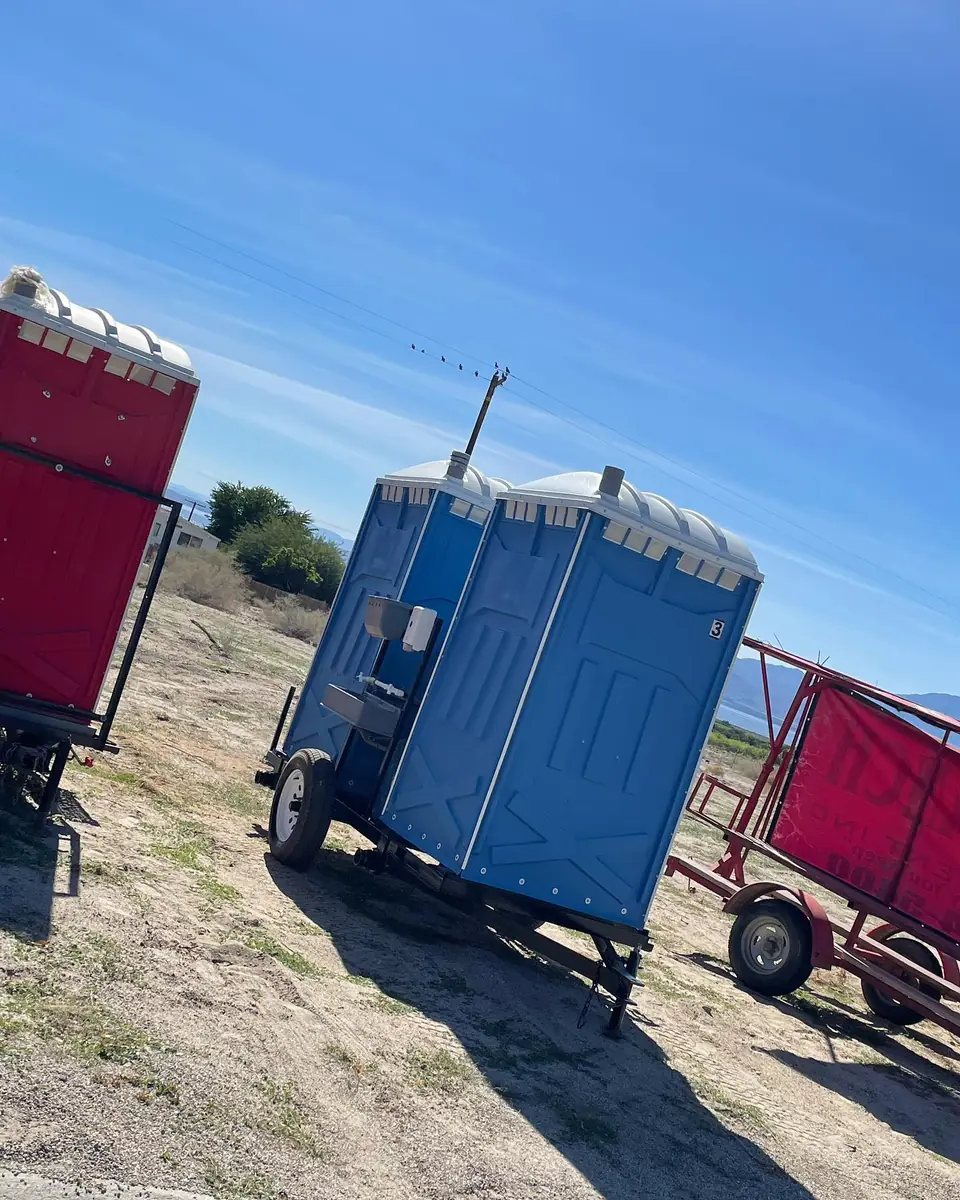
Farm porta potty rental · Salinas Valley
Agricultural Field Toilet Rental in Salinas for harvest crews that move every day.
Agricultural field toilet rental in Salinas for lettuce, strawberry and vineyard crews. Farm porta potties, handwashing stations and towable units are sized to Cal/OSHA's 1-per-20 rule and serviced weekly.
Towable units follow the crew down the field.
Fast answers
- Delivery areaRanches across the Salinas Valley, North County and Pajaro Valley. Map pins work. Check your ranch.
- ArrivalMon–Fri, 7 a.m.–5 p.m. Book 2+ business days before the first crew day.
- Which unitToilets for each sex per 20 workers, plus 1 station per 20. See the 47-person example.
- CleaningWeekly pump, scrub and restock on a set day; extra visits for peak weeks.
- Full costItemized: units, stations, delivery and pickup, extra visits and tax, per 28-day cycle.
Mon–Sat, 7 a.m.–7 p.m. · Most callers get an itemized quote in under 10 minutes.
Farm & harvest crews
What does agricultural field toilet rental in Salinas include?
Agricultural field toilet rental in Salinas includes field toilets, handwashing stations and towable units sized to Cal/OSHA's 1-per-20-workers rule. A field toilet is a standard farm porta potty set within walking distance of a crew. Every long-term unit is pumped, cleaned and restocked once a week on a 28-day cycle.
- Standard field toilets with a tank of about 60 gallons — above the county's 40-gallon minimum
- Handwashing stations with about 34 gallons of fresh water, soap and paper towels
- Towable units on a trailer that move with a crew from block to block
- Weekly pump, scrub, deodorizer and restock — extra visits can be added for big crews
- A set weekly service day, so you know when each unit was last cleaned
- Ranch roads with no street address: a dropped map pin works
The Salinas Valley is called the “Salad Bowl of the World” for its lettuce, leafy greens, strawberries and wine grapes. Hand-harvest crews move fast across those fields, and field toilets have to keep up with them.
Cal/OSHA + county rules
What do Cal/OSHA and Monterey County require for field toilets?
Cal/OSHA 8 CCR §3457 requires separate toilets for each sex for every 20 field workers, plus 1 handwashing facility per 20 workers. The toilets must sit within a ¼-mile walk or 5 minutes, whichever is shorter. Monterey County Environmental Health adds tank sizes, an inspection sticker and a yearly permit.
| Rule | What it says | Who sets it | How our units line up |
|---|---|---|---|
| Toilet count | Separate toilets for each sex, 1 per 20 employees or fraction. Fewer than 5 hand-labor workers: 1 all-gender single-user toilet is enough. | Cal/OSHA §3457 | We size the order by men and women on the crew |
| Handwashing | 1 facility per 20 employees, at or near the toilets, with potable water, soap and single-use towels | Cal/OSHA §3457 + county | Station: 2 sinks, foot pump, soap, paper towels |
| Distance | Within a ¼-mile walk or 5 minutes, whichever is shorter | Cal/OSHA §3457 + county | Towable units move as the crew moves |
| Toilet tank | Waste tank of at least 40 gallons | Monterey County EH | About 60 gallons, typical for this unit class |
| Handwash tank | Fresh-water tank of at least 15 gallons; refilled before it runs empty | Monterey County EH | About 34 gallons of fresh water |
| Toilet paper | Paper in a holder in every unit | Monterey County EH | 2 rolls restocked at every weekly service |
| Records | Written service records kept for 2 years | Cal/OSHA §3457 + county | Weekly service on a set day; keep your own record of each visit |
| Permit | Annual health permit, valid July 1–June 30, renewed each April; sticker on the upper left front of each toilet | Monterey County EH | Check every unit for a current sticker before harvest |
| Violations | Critical violations fixed immediately; non-critical within 5 working days | Monterey County EH | Call us the same day if a unit fails an inspection |
Minimum vs. recommendation: The table is the legal minimum. Our recommendation is one step above it: count men and women separately, add a station when the crew eats in the field, and add a service visit in peak weeks. Confirm with your food-safety lead or Monterey County Environmental Health; this is planning help, not legal advice.
Worked example
How many field toilets does a 47-person harvest crew need?
A 47-person harvest crew with 29 men and 18 women needs 3 field toilets and 3 handwashing stations under Cal/OSHA §3457. The 29 men need 2 toilets, because 29 is 20 plus a fraction, and the 18 women need 1. The 47 workers need 3 stations at 1 per 20.
- 1
Split the crew by sex
29 men and 18 women. §3457 counts each group on its own, so do not divide 47 by 20 and stop there.
- 2
Count toilets for men
29 ÷ 20 = 1.45. Any fraction rounds up, so the men need 2 toilets.
- 3
Count toilets for women
18 ÷ 20 = 0.9. That rounds up to 1 toilet for the women.
- 4
Count handwashing stations
47 ÷ 20 = 2.35. That rounds up to 3 stations, placed at or near the toilets.
- 5
Check the walk
If the crew splits across 2 blocks more than ¼ mile apart, each block needs its own set. Plan 2 sets, or use towable units that follow each half.
2 restroom units
Confirm this count: (831) 260-5800Method: 8 CCR §3457 counts, 1 toilet per 20 employees of each sex (or fraction) and 1 handwashing facility per 20 employees. The calculator gives a quick crew-wide count; split by men and women for the final order, as in the worked example.
Moving crews
How do towable field toilets move with a crew?
Towable field toilets ride on a trailer, so a crew can move 2 or more units to the next block in minutes. Towable units keep the toilets inside the ¼-mile, 5-minute walk as a harvest crew works down a field. Text us the new location before the weekly service day so the truck finds them.
Field edges and ranch roads
Park the trailer on a firm field edge or ranch road. The service truck must park within about 15 feet of the units.
No address? Drop a pin
Most blocks have no street number. A map pin plus a gate code is enough for the driver.
Afternoon wind
Face doors away from the valley's afternoon wind. Set the trailer brake or chock the wheels on any slope.
Rainy months
From November to March, soaked clay can trap a truck. Keep units on gravel or a ranch road, not in the furrows.
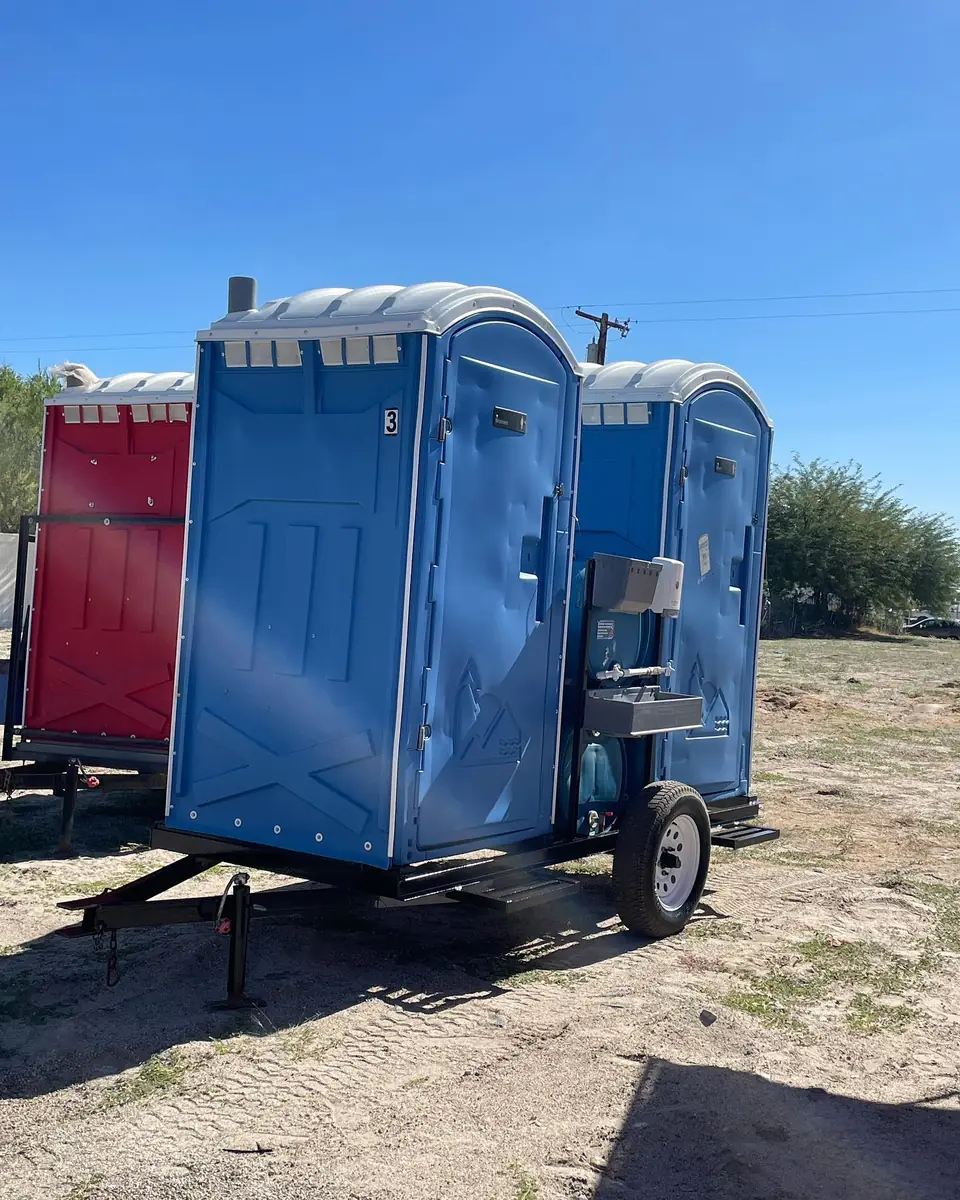
Fixed units work well for a packing shed, a ranch yard or a crew that stays on one block all week. Towable units fit crews that cover a new block every day or two.
Seasonal timing
When is harvest season for field toilet rentals in the Salinas Valley?
Salinas Valley harvest season for field toilet rentals runs from spring through fall, roughly April to November. Lettuce and leafy greens peak in summer, strawberry picking runs spring into fall, and grape harvest comes in late summer and fall. Book field units 2 or more business days before the first crew day.
| Season | Typical field work | What growers usually rent |
|---|---|---|
| Early spring (Mar–Apr) | Planting, thinning, first strawberry picks | Fixed units + stations at ranch yards; county permits renewed in April |
| Late spring–summer (May–Aug) | Peak lettuce, greens and strawberry harvest | Towable sets that follow crews; extra service visits in big weeks |
| Late summer–fall (Aug–Nov) | Grape harvest, late greens, cleanup | Towable units on vineyard roads; pickups as blocks finish |
| Winter (Dec–Feb) | Much leafy-green production moves south; crews shrink | Fewer units; every-other-week service for light use |
End-of-season tip: The 28-day cycle renews on its own. When a block finishes early, call at least 2 business days before day 28 to stop the next cycle. We text a reminder before each renewal.
Original data from our phone line
What do growers and ranch managers ask when they call?
Farm calls are rare on our rental line: 1 of 78 recorded customer calls we reviewed from 2025–2026 was a ranch. The related questions were common: 16 calls (21%) discussed the 28-day cycle and 9 calls (12%) asked about handwashing. Another 6 calls (8%) asked how often units are cleaned.
“What's the rate, and how often do you come to service it?”
Long-term caller
“I don't think I'm going to need it cleaned weekly right away, since the work will be sporadic.”
Landscape contractor
“Do you have those little sink hand wash stations?”
Caller adding handwashing
Sporadic sites are the reason we offer every-other-week service on request. A field crew that works daily should stay on weekly service, because §3457 expects clean, stocked units.
A Salinas dispatcher answers
How many field toilets does your next harvest block need?
Tell us the crew size, the ranch location and the start date. We confirm units and a service day on the call.
Mon–Sat, 7 a.m.–7 p.m. · Most callers get an itemized quote in under 10 minutes.
How much is a field toilet for a month during harvest?
On recent recorded quotes, a long-term unit with weekly service ran about $185–$295 per 28-day cycle, plus a one-time delivery and pickup charge of about $59–$144. A recent ranch quote was about $211 per 28 days plus $59 delivery. A toilet plus handwash combo ran about $495 per 28 days. Your itemized quote is the final price.
Do I need a separate hand wash station for each toilet?
Not always. Cal/OSHA §3457 asks for 1 handwashing facility per 20 workers, not per toilet. A 47-person crew needs 3 stations even if it has 3 toilets. Each station has 2 sinks, a foot pump, about 34 gallons of fresh water, soap and paper towels.
Can you deliver to a ranch with no street address?
Yes. Send a map pin from your phone and any gate code. The driver calls about 30 minutes ahead. The unit must sit within about 15 feet of where the truck can park.
Can my crew move the units to another field?
Yes, with towable units on a trailer. Text us the new location before the weekly service day. Fixed units should be moved by our driver; call to schedule a move.
Do you give us service records for Cal/OSHA?
Ask the dispatcher at booking what we can send for your file. Under §3457, the grower keeps sanitation records for 2 years. Weekly service runs on a set day, and every 28-day cycle carries its own itemized invoice and quote number.
Is weekly cleaning enough for a big picking crew?
Weekly service is included on every long-term unit. A crew near the 20-per-unit limit in hot weather may need a second visit each week. Extra visits are added to your quote as their own line.
What happens when the harvest ends early?
Call (831) 260-5800 at least 2 business days before day 28 and we schedule pickup. Billing stops on the pickup date. We text a reminder before each 28-day cycle renews.
Fastest: call (831) 260-5800
How do I get an itemized porta potty quote?
Calling is faster — a dispatcher can check the route and your ZIP while you are on the line. Prefer to type? Send these six details and we text or call back with every line item: unit, delivery and pickup, servicing, any rush fee, and tax.
- No phone tree — a person in Salinas answers
- Every fee named before you pay
- Weekend events: we drop Friday, pick up Monday at no extra charge
- Long-term units serviced weekly on a 28-day cycle
Mon–Sat, 7 a.m.–7 p.m. Form replies within 1 business hour during open hours.